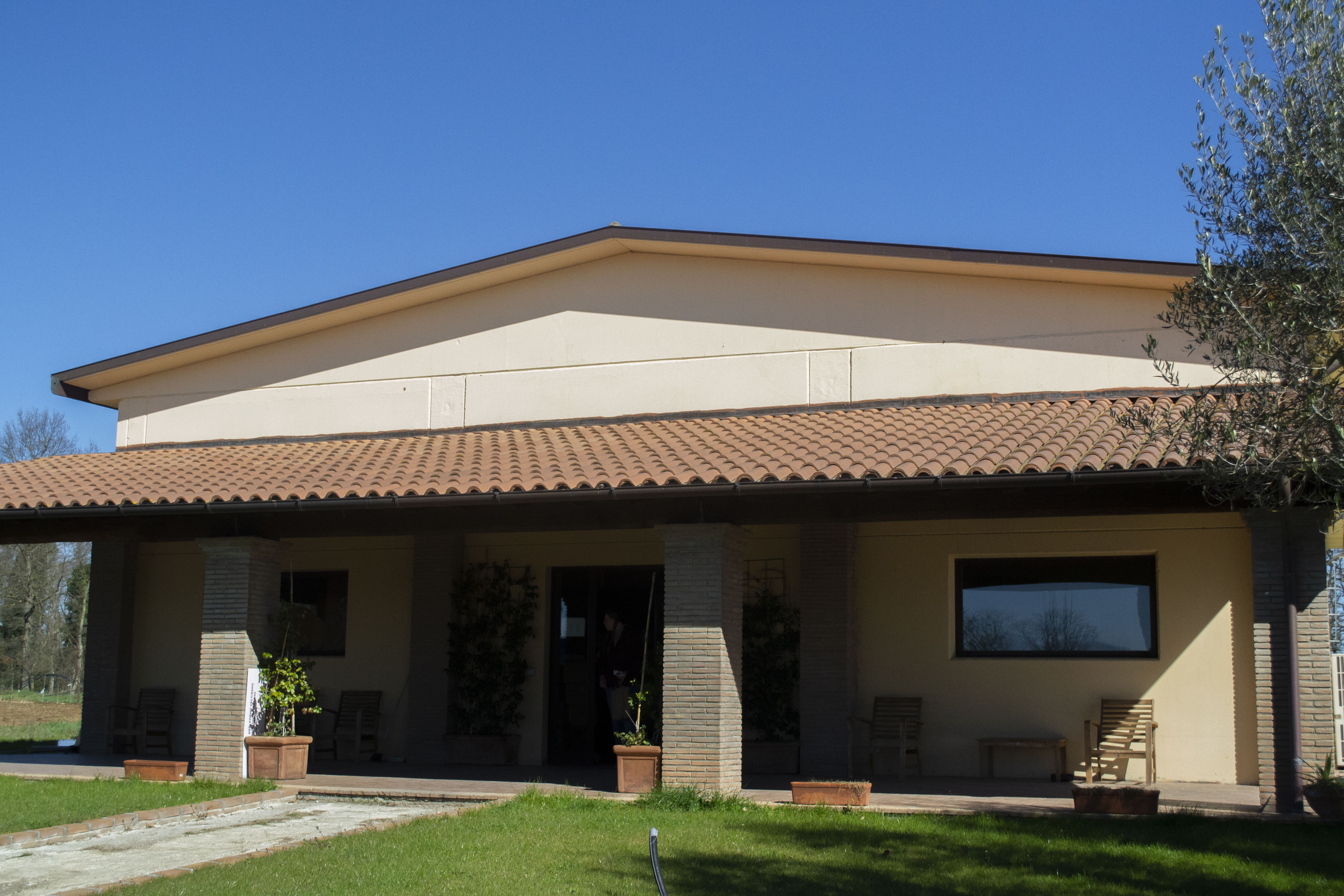
Located in the Italian countryside less than 20 minutes from Viterbo, is a small farm and pasta factory. Fornovecchio is a family owned organic farm that produces flour, legumes, cereals, and the most quintessentially Italian food, pasta. This 19th century farm began producing and selling pasta in 2006 when a law changed allowing local farms to produce pasta in house. The current owner, Gegan Claudio Pagliaccia, inherited the business from his father, and his father before him. This family prides themselves on providing sustainable, affordable, and healthy food to the community.
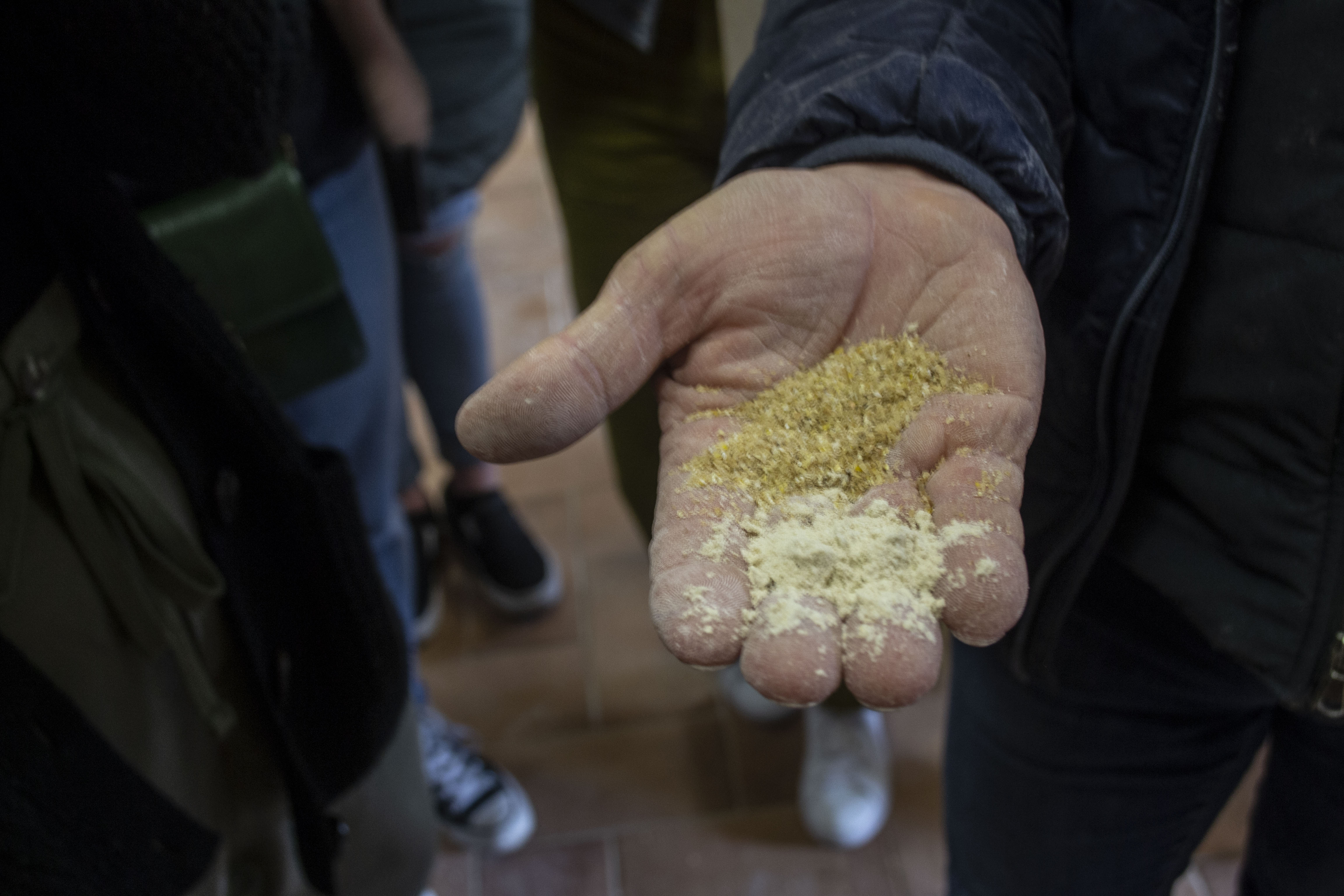
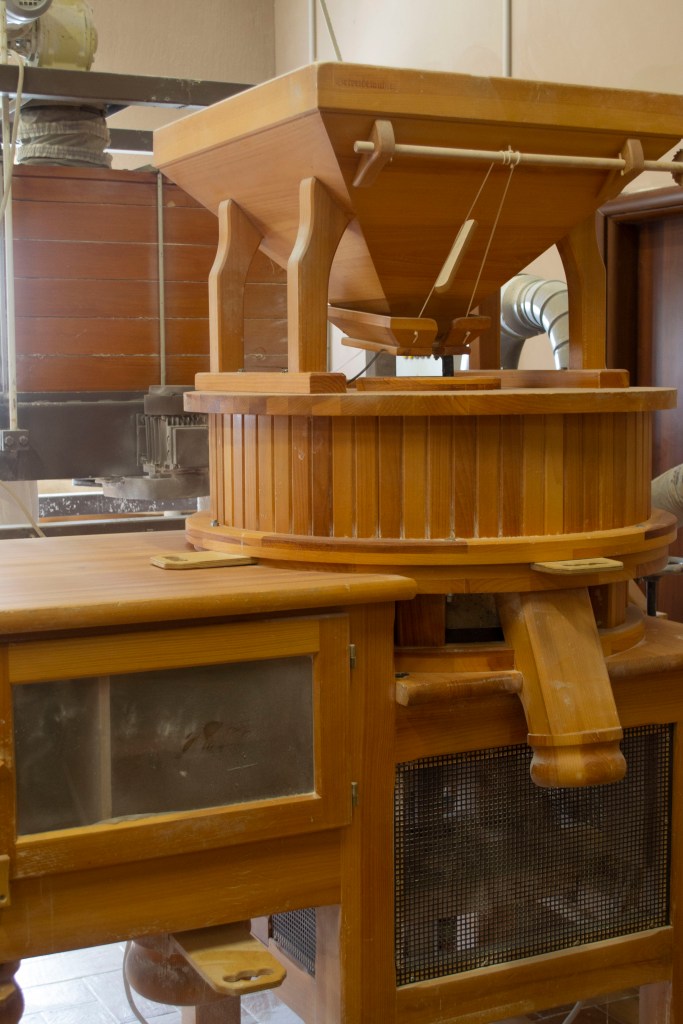
Fornovecchio’s flour is unique in its production. They use a traditional stone mill to grind up their grain as opposed to a technological mill. They respect and honor the traditional method of making flour. The factory produces many kinds of flour including semola, a thicker flour used for making pasta. The flour is made from the grains they grow on their farms. The types of flour and pasta produced is dependent upon the growing seasons of the grain. They produce pastas made from many different types of grain, the most traditional of these being monococco. From grain, to dough, to wet pasta, to dry pasta, it takes about 24 hours for the factory to make 10 kilos of sellable product.
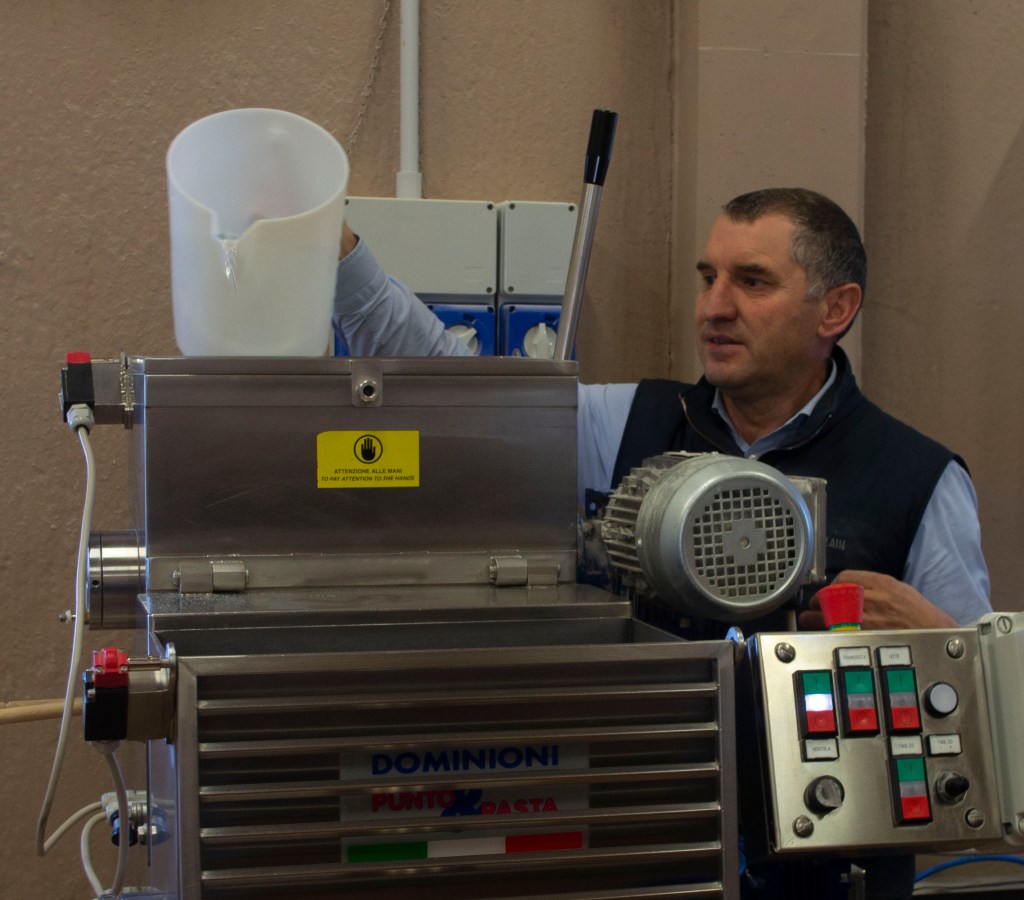
With the flour already inside the machine, Pagliaccia pours water into the top. 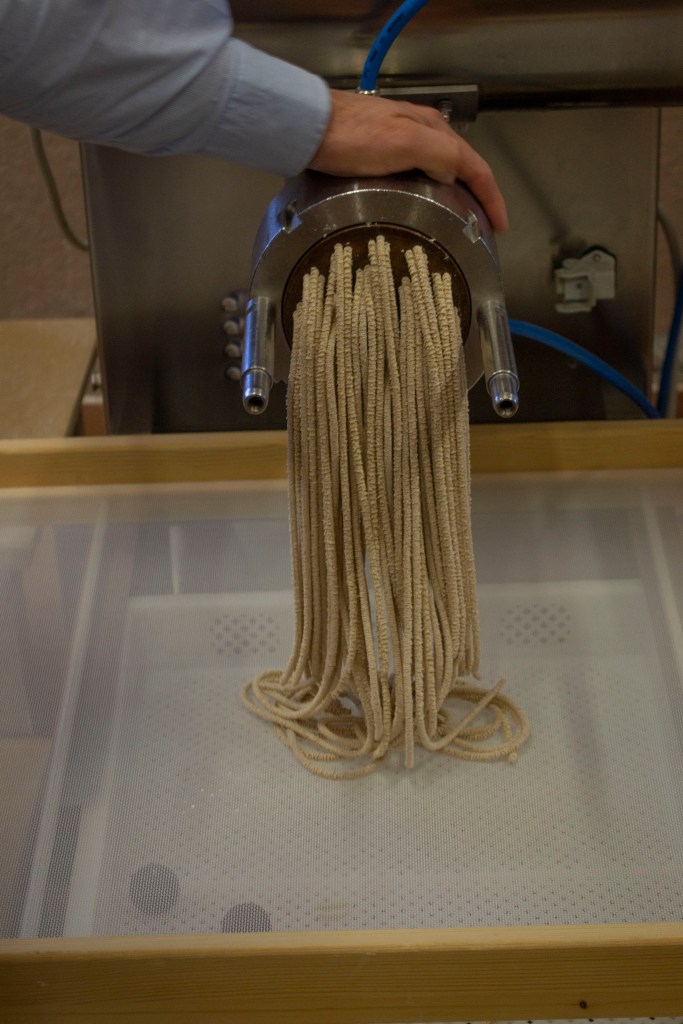
The spaghetti is pushed out of the trafila and Pagliaccia cuts them with scissors when they are the perfect length. 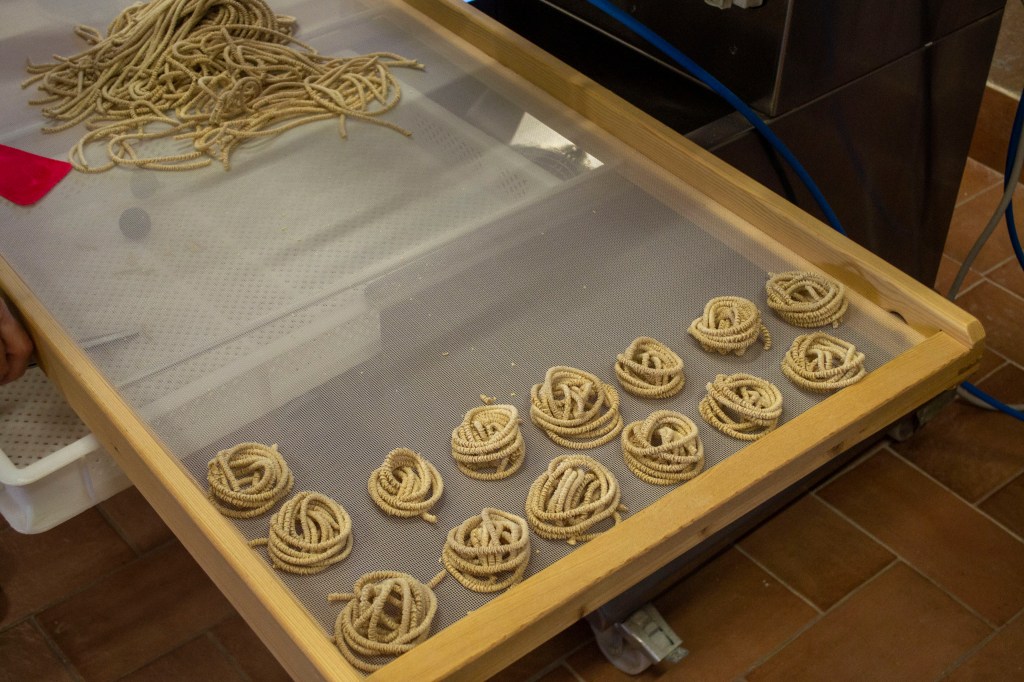
The Spaghetti is rolled into little “nests” so that when it is dehydrated it doesn’t break easily.
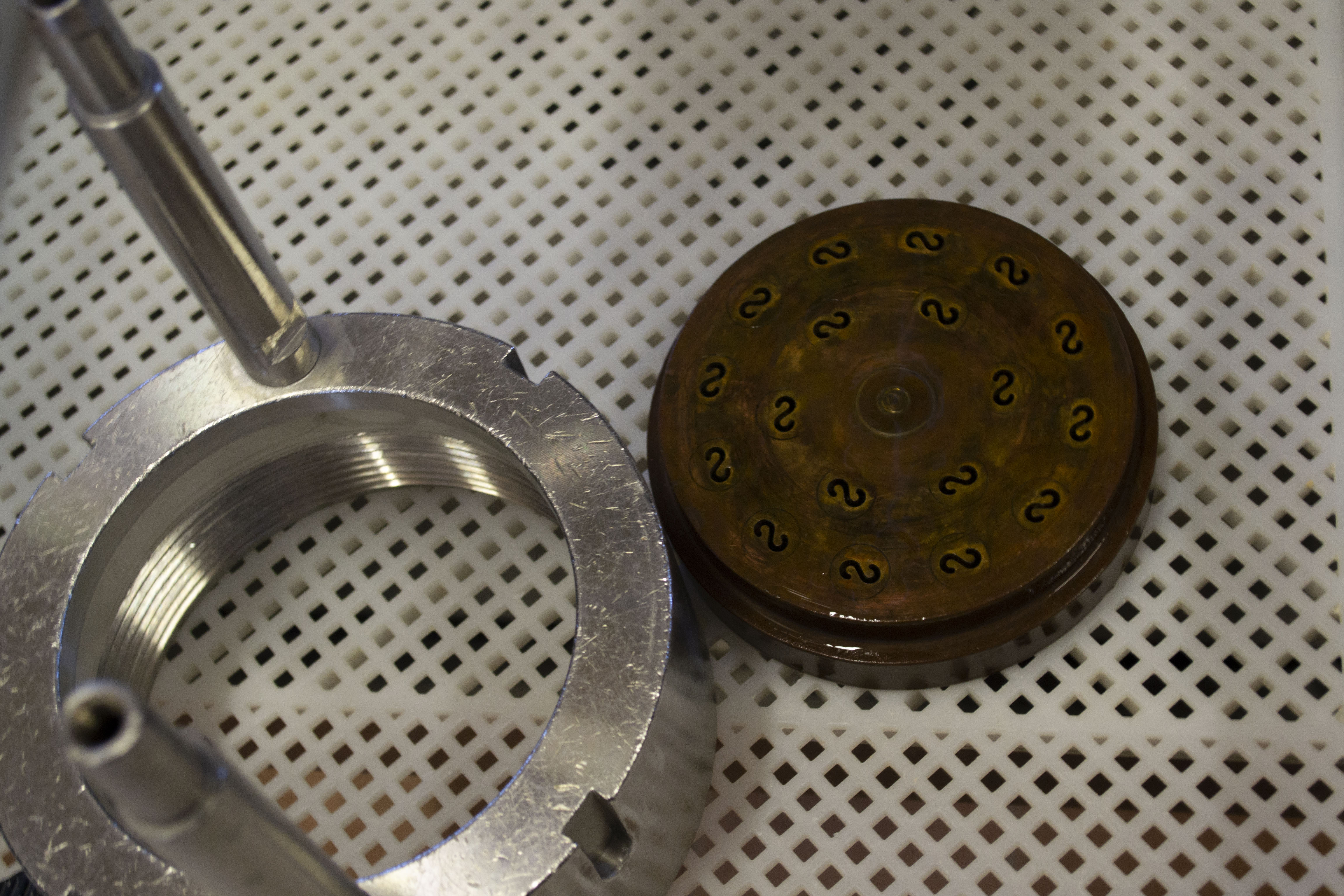
The tool responsible for creating the many shapes of pasta is called a trafila. Fornovecchio uses a bronze trafila because it produces a higher quality pasta. The pasta is more porous and thus absorbs sauces better than pasta made with a stele or plastic trafila. Gegan Claudio’s personal favorite shape of pasta they produce is the difarro, or the spiral pasta.
So much love and respect is put into Fornovecchio’s production of pasta. With the locally and organically sourced ingredients, a reverence for traditional production methods, and a passion for the product dating back generations, Fornovecchio Pasta Mill offers a truly unique product to the community. Gegan Claudio had this to say about the significance of his product; “It is the product of the earth without any manipulation or chemicals. That is where its value lies” (quote translated from Italian to English).
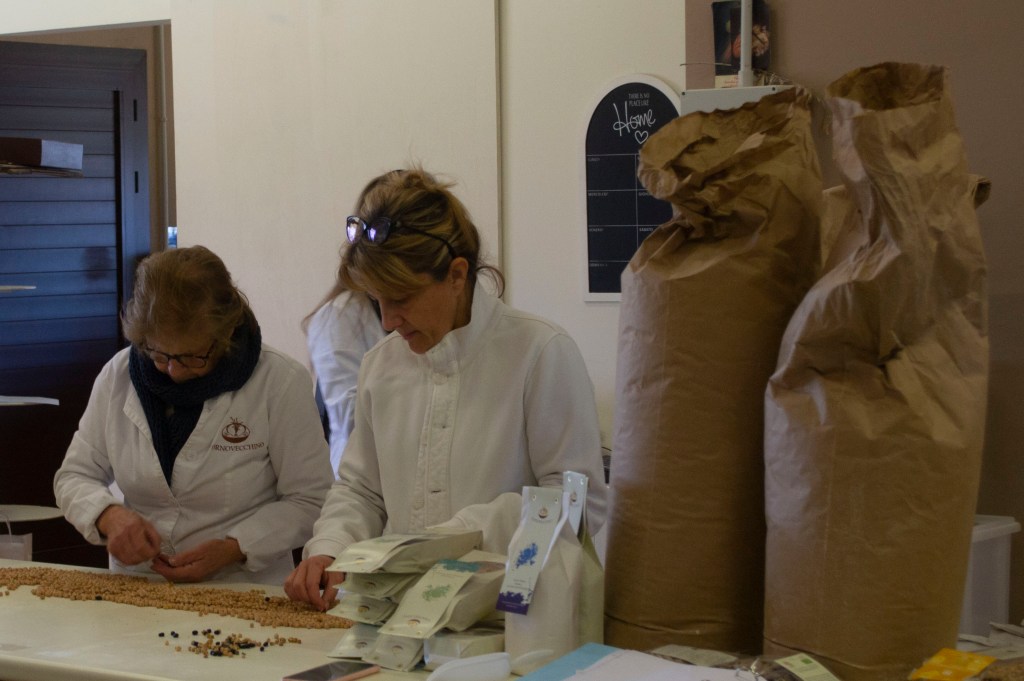
Some employees sorting through legumes before packaging. 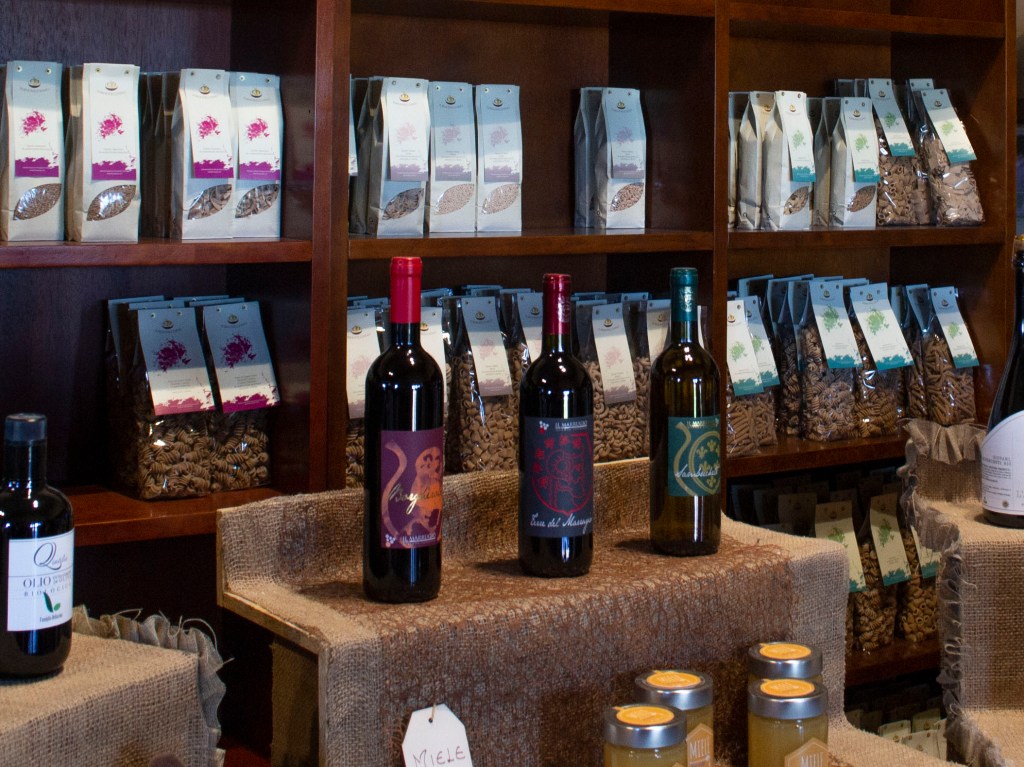
Store you see upon entering the factory.
The Italian people’s admiration of food is evident everywhere in Italy and nowhere more so than Fornovecchio’s pasta mill. As a traveler, I took this new-found appreciation for food back to America with me and attempted to share it with my closest friends. I prepared them my favorite Italian dish, pasta con carbonara. A peasant dish that uses 5 simple ingredients, guanciale (or pig cheek), pecorino romano cheese, egg yolks, black pepper, and spaghetti. Because I was in America, I did have to substitute a few ingredients. Guanciale is hard to come by, so I used an equally fatty cut of pig, pancetta. I also had to settle for freshly ground parmesan cheese instead of pecorino romano. I was careful to choose a pasta brand that was organic.
As I prepared the food, my friends joined me in the kitchen. We sipped our wine and caught up on each other’s lives. It was such a wonderful time we set aside to just be together and enjoy each other’s company. I felt like a master chef as I combined the egg, pepper, and cheese mixture to the pasta, being vigilant so as to not scramble the eggs. Although the pasta was not made from locally sourced grains in Italy, the dish turned out beautifully.
The pride I felt watching my friends enjoy the food was fantastic. I was overjoyed to share even a small piece of what I gained from my short time in Italy. The Italian people take such pleasure in their food. It is a huge part of their culture. It was wonderful to learn about the process of making pasta and the importance of good food.
 Italian Study Abroad Travel Writing and Photography Blog